


Shopping Basket
Add £40 to unlock free shipping
Onevit health hub
Mushroom Supplements: Lion's Mane, Reishi & Beyond
written by

The OneVit Team
Updated on
6th July 2026
10 min
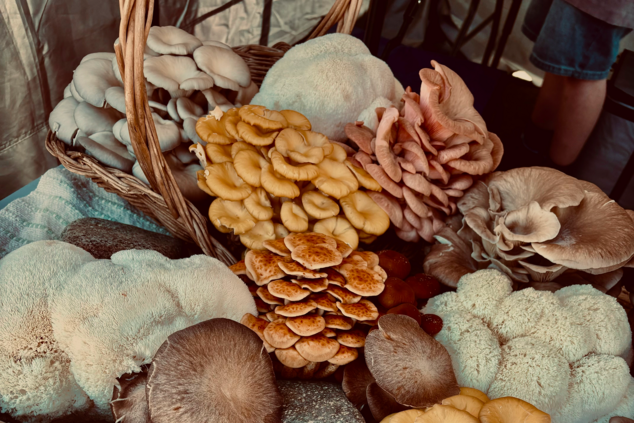
Mushroom supplements have moved from health-food shelves into the mainstream, with Lion's Mane, Reishi, Cordyceps and multi-mushroom blends now among the most searched-for products in UK wellness. The marketing around them can be dramatic, so this guide takes a calmer, more useful approach. We'll explain what functional mushrooms actually are, walk through the main types, look honestly at what the research shows (and where it doesn't), and set out exactly what to check before you buy.
- What are functional mushrooms?
- The main types of mushroom supplements
- Do mushroom supplements actually work?
- How to choose a quality mushroom supplement
- How to take mushroom supplements
- Are mushroom supplements safe?
- OneVit Mushroom Complex: what's in it
- Frequently asked questions
What are functional mushrooms?
Functional mushrooms (also called medicinal mushrooms) are fungi that have a long history of use in food and traditional practice, and that are now studied for their unusual mix of natural compounds.
What makes these species interesting to researchers is their chemistry. They contain beta-glucans, a type of polysaccharide (a large sugar molecule) found in the cell walls of fungi, along with triterpenes and other plant-like compounds.4,6 Lion's Mane, for example, contains beta 1-3, 1-6 glucans as well as compounds called hericenones and erinacines.6 These are the compounds most laboratory research focuses on.
The main types of mushroom supplements
Most mushroom supplements are based on one species or a blend of several. Here are the ones you'll see most often.
Lion's Mane (Hericium erinaceus)
A white, shaggy mushroom that grows on hardwood trees across Europe, Asia and North America. It's edible and has a taste often compared to seafood. In supplement form, it's the one most associated with focus and mental performance, and it's the most heavily researched of the group, largely because of its hericenone and erinacine content.4,5
Reishi (Ganoderma lucidum)
A glossy, reddish-brown, woody mushroom used in East Asian traditions for centuries, sometimes called the "mushroom of immortality". It's too tough to eat and is almost always taken as an extract. Reishi is rich in triterpenes and beta-glucans.
Cordyceps
Traditionally a rare wild fungus, though nearly all supplements today use cultivated Cordyceps militaris or a fermented strain called CS-4 rather than genuine wild Cordyceps sinensis, which is extremely expensive. It's popular among people interested in energy and exercise.
Chaga (Inonotus obliquus)
A dark, crusty growth found on birch trees in cold climates. It's high in antioxidants but also high in oxalates, which is an important safety point we cover later.
Turkey Tail (Trametes versicolor)
Named for its fan-shaped, banded appearance, Turkey Tail is one of the most clinically studied and researched mushrooms due to its polysaccharide content (PSK and PSP).
Shiitake and Maitake
Both are culinary mushrooms in their own right and appear in many blends. They contribute beta-glucans and are generally very well tolerated in food amounts.
Do mushroom supplements actually work?
The science behind functional mushrooms is more substantial than sceptics sometimes assume, and the early results are genuinely encouraging.
Take Lion's Mane, the most researched of the group. The interest in it rests on a clear biological mechanism: its natural compounds, hericenones and erinacines, have been shown in laboratory studies to stimulate nerve growth factor (NGF), a protein involved in the growth and maintenance of nerve cells.4,6 That mechanism has begun to carry through into human trials. In one double-blind, placebo-controlled study, older adults with mild cognitive impairment who took Lion's Mane daily for 16 weeks showed improved scores on a cognitive scale compared with those on a placebo, with the effect tailing off after they stopped.7 Later trials have reported similar cognitive improvements over around 12 weeks of daily use.5
Other mushrooms have their own promising threads. Turkey Tail is one of the most heavily researched of the group for its polysaccharides, while Reishi and Cordyceps have been investigated for immune modulation and exercise capacity respectively. Across the group, reviews consistently describe antioxidant and anti-inflammatory activity in laboratory and animal models.4
It would be misleading, though, to present any of this as settled. The evidence base is still young and uneven: trials tend to be small, they use different extracts and doses, and they don't always agree. Larger, longer and better-standardised human trials are what the field still needs to draw firm conclusions.4
So do mushroom supplements work? The fair answer is that the early findings are encouraging, the traditional track record is long, and the mechanisms are plausible, but the definitive human proof isn't in yet. It's also worth remembering that these are sold as food supplements rather than licensed medicines, so specific health benefits aren't formally authorised in the UK.1 Treat them as a promising addition to an already healthy routine rather than a guaranteed fix, and your expectations will be in the right place.
How to choose a quality mushroom supplement
If you do decide to try mushroom supplements, product quality varies enormously. This is where your money is either well spent or largely wasted, so it's worth knowing what to look for. When people search for the best mushroom supplements UK brands offer, these are the checks that matter most.
Fruiting body vs mycelium. The fruiting body is the mushroom itself, the part you'd recognise. Mycelium is the root-like network, and cheaper products often grow it on grain and include the whole lot. Fruiting-body extracts typically contain far higher levels of the active beta-glucans, so look for products that specify fruiting body.
Beta-glucan percentage, not just "polysaccharides". A common trick is to state a high "polysaccharide" figure, which can be inflated by leftover starch from grain. The more meaningful number is the beta-glucan content. A good extract states this clearly.
Extract ratio. An extract concentrates the mushroom, so a ratio such as 8:1 tells you eight parts raw mushroom made one part extract. Some mushrooms, like Reishi, benefit from dual extraction (water and alcohol) to capture both the water-soluble beta-glucans and the alcohol-soluble triterpenes.
Third-party testing. Because most mushroom raw material is grown and processed abroad, independent testing matters. Look for a certificate of analysis (COA) confirming beta-glucan levels and screening for heavy metals and contaminants.
Named species and doses. The label should name each mushroom species and state how much of each you get per serving, rather than hiding everything inside a vague "proprietary blend".
How to take mushroom supplements
Because these are botanicals rather than vitamins or minerals, there's no official recommended daily amount. Manufacturers set their own serving sizes, and typical extract doses in the research and on the market tend to fall in the region of 500mg to 2,000mg per day, depending on the mushroom and the concentration of the extract.
A few practical points:
- Consistency matters more than timing. If any effect builds, it tends to do so gradually with daily use over weeks rather than from a single dose.
- Timing is largely personal. Some people take stimulating-style mushrooms such as Cordyceps or Lion's Mane earlier in the day, and calmer traditions place Reishi in the evening. There's no strict rule.
- Follow the label. Stick to the serving size on your specific product, since concentration varies between brands.
If you take any medication or have a health condition, speak to your GP or pharmacist before starting, for the reasons in the next section.
Are mushroom supplements safe?
For most healthy adults, functional mushroom supplements are generally well tolerated at normal serving sizes.5,6 The most common side effects are mild and digestive, such as an upset stomach, and some people can have an allergic reaction to mushrooms.
That said, "natural" does not mean "risk-free", and there are some important cautions. You should speak to your GP or pharmacist before taking mushroom supplements if any of the following apply to you:
- You take blood-thinning medication. Some mushrooms, including Reishi, Chaga and Turkey Tail, have been associated with effects on blood clotting, so caution is advised alongside anticoagulant or antiplatelet medicines.
- You have an autoimmune condition or take immunosuppressants. Several mushrooms can interact with the immune system, which is a concern for transplant patients and people on immune-modulating treatment.
- You take medication for diabetes. Some mushrooms may affect blood sugar, so monitoring may be needed.
- You have kidney problems or a history of kidney stones. Chaga is high in oxalates, and heavy use has been linked to kidney issues in case reports, so it's best avoided if you're at risk.
- You are pregnant or breastfeeding. There isn't enough safety data, so it's better to wait and check with a midwife or doctor first.
- You have surgery planned. Because of the possible effect on clotting, tell your surgeon about any supplements you take.
Rarely, prolonged high-dose Reishi use has been linked to liver problems in isolated reports, and raw or undercooked Shiitake can cause a distinctive skin rash. These are uncommon, but they're a good reminder to stick to sensible doses and buy from reputable brands. If you notice unusual bruising, a rash, breathing difficulty or any other unexpected reaction, stop taking the product and seek medical advice.
OneVit Mushroom Complex: what's in it
If you'd rather not take each type of mushroom separately, a considered blend can be a simpler starting point. OneVit Mushroom Complex combines extracts from five mushroom species in one daily serving of two capsules: 1,000mg Lion's Mane, 1,000mg Cordyceps sinensis, and 500mg each of Shiitake, Maitake and Reishi, with the species and amounts stated clearly on the label. Each serving also provides 10mg of zinc (as zinc citrate) and 20µg of vitamin D3. Zinc contributes to normal cognitive function and to the normal function of the immune system, and vitamin D contributes to the normal function of the immune system.1
One important note: OneVit Mushroom Complex contains soya (within the Cordyceps extract), so it isn't suitable if you have a soya allergy. As with any supplement, check with your doctor before taking it alongside medication.
If you like the idea of pairing your mushrooms with another well-known botanical, OneVit Ashwagandha KSM-66 is a popular companion. It uses a full-spectrum root extract of Withania somnifera, a plant with a long history in Ayurvedic tradition, standardised as the widely researched KSM-66 form. And if your main goal is simply covering your nutritional bases, OneVit Complete Multivitamin may be a more foundational place to start than any single botanical.
Frequently asked questions
Do mushroom supplements really work? The early research on functional mushrooms is promising, and they have a long traditional history, but high-quality human evidence is still limited and health claims for these botanicals are not currently authorised in the UK. It's best to take them with realistic expectations rather than as a guaranteed fix.
How long do mushroom supplements take to work? There's no established timeframe, and effects (if any) are generally reported to build gradually with consistent daily use over several weeks rather than from a single dose.
When is the best time to take Lion's Mane or other mushrooms? Timing is largely down to personal preference. Some people take Lion's Mane or Cordyceps earlier in the day and Reishi in the evening, but consistency matters more than the exact time.
Can you take different mushrooms together? Many products combine several species, and taking a blend is common. If you're on any medication or have a health condition, check with your GP or pharmacist first, since some mushrooms can interact with medicines.
Are mushroom supplements safe? For most healthy adults they're generally well tolerated, with mild digestive upset being the most common side effect. People on blood thinners or immunosuppressants, those with kidney concerns, and anyone pregnant or breastfeeding should get individual advice before taking them.
Are mushroom supplements the same as magic mushrooms? No. Functional mushrooms such as Lion's Mane and Reishi have no psychoactive effect and are legal in the UK. Psilocybin ("magic") mushrooms are a controlled Class A drug and are completely different.
What should I look for on the label? Look for fruiting-body extract, a stated beta-glucan percentage (not just total polysaccharides), an extract ratio, named species with individual doses, and evidence of third-party testing.
References
- Department of Health and Social Care. Great Britain Nutrition and Health Claims (NHC) Register. GOV.UK. https://www.gov.uk/guidance/great-britain-nutrition-and-health-claims-nhc-register
- Advertising Standards Authority / CAP. Food: Health claims (including "on-hold" botanical claims). https://www.asa.org.uk/advice-online/food-health-claims.html
- Landscape of Herbal Food Supplements: Where Do We Stand with Health Claims? Foods / Nutrients (review). PMC. https://www.ncbi.nlm.nih.gov/pmc/articles/PMC12073160/
- Lion's Mane Mushroom (Hericium erinaceus): A Neuroprotective Fungus with Antioxidant, Anti-Inflammatory, and Antimicrobial Potential: A Narrative Review. Nutrients. 2025. https://pubmed.ncbi.nlm.nih.gov/40284172/
- Benefits, side effects, and uses of Hericium erinaceus as a supplement: a systematic review. 2025. https://pubmed.ncbi.nlm.nih.gov/40959699/
- Subchronic toxicity and genotoxicity studies of Hericium erinaceus β-glucan extract preparation. PMC. https://pmc.ncbi.nlm.nih.gov/articles/PMC8942846/
- Mori K, et al. Improving effects of the mushroom Yamabushitake (Hericium erinaceus) on mild cognitive impairment: a double-blind placebo-controlled clinical trial. Phytotherapy Research. 2009;23(3):367–372. https://doi.org/10.1002/ptr.2634
This article is for informational purposes only and does not constitute medical advice. If you are considering mushroom supplements, are taking any medication, or have an existing health condition, consult a GP or qualified healthcare professional first.
Subscribe to our newsletter for similar articles & knowledge on supplements