


Shopping Basket
Add £40 to unlock free shipping
Onevit health hub
Best Vitamins for Hair Growth and Thickness in 2026
written by

The OneVit Team
Updated on
17th April 2026
10 min
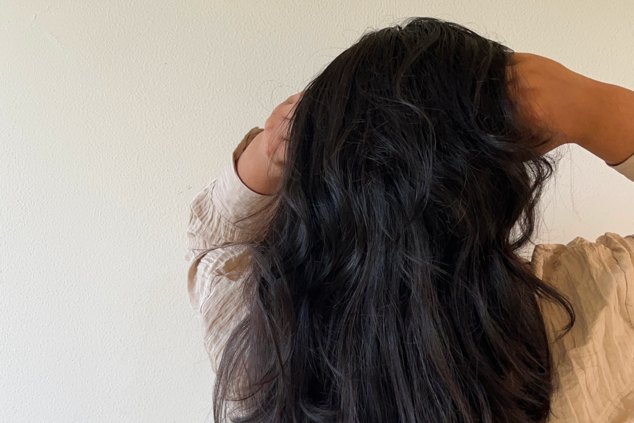
Hair that looks and feels healthy starts well below the surface. Before a strand ever emerges from the scalp, it depends on a steady supply of nutrients: structural proteins to build it, oxygen to fuel its growth, and enzymatic co-factors to keep the whole process running. When those inputs are in good supply, the difference can be visible. When they fall short, the consequences often are too.
This guide covers the four nutrients with the strongest evidence base for hair health: biotin, marine collagen, iron, and vitamin C. For each one, we explain their benefits, what the research shows, and which of our supplements delivers it. We also look at how these nutrients interact because the most compelling case for each one is not what it does in isolation, but how well it works alongside the others.
- Why Vitamins Matter for Hair Growth
- Biotin: The Hair Growth Staple
- Marine Collagen: For Hair Density and Thickness
- Iron: The Often Overlooked Hair Nutrient
- Vitamin C: The Collagen and Iron Amplifier
- How These Nutrients Work Together
- How to Choose the Right Hair Supplement
- The Bottom Line
- References
Why Vitamins Matter for Hair Growth
Hair health is often treated as a cosmetic concern, but at the root, it's a nutritional one. Each strand of hair grows from a follicle embedded in your scalp, and that follicle depends on a steady supply of oxygen, structural proteins, and metabolic co-factors to do its job properly.
The link between micronutrient status and hair is well-established in clinical research. Studies have identified deficiencies in biotin, iron, and vitamin C as contributors to hair thinning and increased shedding.1,2 Collagen, meanwhile, provides the scaffolding within which follicles sit, and its gradual decline with age can affect both hair anchoring and strand diameter over time.3
What this means in practice is that supporting hair growth is less about finding a single nutrient that will solve everything and more about ensuring your body has what it needs at each stage of the follicle cycle - the right structural proteins, sufficient oxygenation, and the co-factors that keep synthesis pathways running.
This guide covers the four vitamins and nutrients with the strongest evidence base for hair health, as well as the OneVit products that deliver each one.
Biotin: The Hair Growth Staple
Biotin, also known as vitamin B7, is arguably the most well-known supplement for hair health, and for good reason. It acts as a coenzyme in the metabolic pathways responsible for amino acid synthesis, and amino acids are the building blocks of keratin, the structural protein that makes up approximately 95% of each hair strand.4
When biotin levels are sufficient, the body can produce keratin more efficiently, which leads to stronger, more resilient hair with improved tensile properties. A systematic review of the clinical literature found that in all reported cases where biotin supplementation improved hair or nail outcomes, patients had an underlying biotin deficiency or related pathology, highlighting the particular importance of adequate biotin status for hair health.5
Separately, a large observational study found that 38% of women presenting with hair loss complaints had low serum biotin levels, suggesting that suboptimal biotin status may be more common than previously recognised.6
Biotin is water-soluble, which matters for supplementation. Unlike fat-soluble vitamins, it is not stored in the body in meaningful quantities. It's also rapidly metabolised and excreted by the kidneys, which means that dietary sources alone (eggs, nuts, certain meats) often fail to maintain optimal levels consistently.
OneVit Biotin delivers 10,000µg of pure, crystallised biotin per tablet (200 times the nutrient reference value) sourced from microorganisms cultivated in quality-controlled environments. One tablet daily, taken with or without food.
Marine Collagen: For Hair Density and Thickness
Collagen is best known for its role in skin, but its relevance to hair is significant and often underappreciated. The dermis of the scalp, the layer in which follicles are anchored, is largely composed of type 1 collagen. As collagen in this dermal matrix declines, follicle structure can become less stable, which may contribute to reduced hair density and strand diameter over time.3
Beyond structural anchoring, marine collagen peptides have been shown to influence follicle cell behaviour directly. A study published in NutraFoods found that supplementation with specific bioactive collagen peptides increased the rate at which follicle cells multiplied by 31% in an in vitro test, suggesting a meaningful effect on hair metabolism and thickness.7
Marine collagen in particular is favoured in supplementation because its smaller peptide structure allows for absorption rates that can exceed those of bovine or porcine collagen by up to 1.5 times.8
Marine collagen is also a source of the amino acid proline, a precursor to hydroxyproline, the amino acid that gives collagen its triple-helix stability. Maintaining adequate proline availability supports both the body's own collagen synthesis and the structural integrity of existing dermal tissue.
OneVit Marine Collagen Complex provides 450mg of type 1 hydrolysed marine collagen per capsule, sustainably sourced from the North Atlantic. The formula also includes 30mg of hyaluronic acid (sodium hyaluronate) for scalp hydration and 19.2mg of vitamin C to support the body's collagen synthesis pathways. One capsule daily.
Iron: The Often Overlooked Hair Nutrient
Iron plays a slightly different role for hair health. It's less frequently mentioned, but arguably one of the most important for those who are deficient. Its role isn't structural but circulatory. Iron is a core component of haemoglobin, the protein in red blood cells that transports oxygen from the lungs to the body's tissues, including the scalp and hair follicles.9
Hair follicles are among the most metabolically active structures in the body, and they require a reliable oxygen supply to sustain the rapid cell division that drives hair growth. When iron levels fall, oxygen delivery to the follicle is compromised, which can push follicles prematurely into the telogen (resting) phase - a condition known as telogen effluvium.10 In its more chronic form, iron deficiency is associated with female pattern hair loss and diffuse thinning, particularly in premenopausal women whose dietary intake often fails to compensate for menstrual losses.11
A systematic review published in the Journal of the American Academy of Dermatology examined the relationship between iron status and hair loss and concluded that correcting iron deficiency could support improvements in hair density in those with confirmed low ferritin levels.12
OneVit Iron delivers 14.7mg of elemental iron as ferrous fumarate per tablet, a form chosen for its superior bioavailability compared to other iron salts. Each serving provides 105% of the nutrient reference value. Best taken on an empty stomach, ideally alongside a source of vitamin C to enhance absorption.
Vitamin C: The Collagen and Iron Amplifier
Vitamin C earns its place in a hair supplement routine not by acting on hair directly, but by enabling two of the most important processes that support hair health: collagen synthesis and iron absorption.
Collagen is not produced by the body in a single step. It begins as procollagen, and converting procollagen to its mature, functional form requires a family of enzymes called prolyl hydroxylases. Those enzymes depend on vitamin C as a co-factor (something that enables enzyme activity).13 Without adequate vitamin C, collagen synthesis slows, which over time can affect the structural integrity of the scalp dermis and the follicle environment. Research has confirmed that vitamin C contributes to normal collagen formation.
On the iron side, vitamin C substantially improves the intestinal absorption of non-haem iron, the type found in plant foods and most supplements. Research has shown that the enhancement is dose-dependent and directly proportional to the quantity of ascorbic acid present in the meal, with meaningful increases in absorption observed across a range of conditions.14 This makes vitamin C particularly valuable for those taking iron supplements or for individuals following plant-based diets, where non-haem iron is the only dietary source.
Vitamin C is also a water-soluble antioxidant. The scalp's hair follicles are subject to oxidative stress, a process linked to follicle miniaturisation and premature greying, and vitamin C contributes to the body's antioxidant defences that help counteract this.15
OneVit Vitamin C provides 1,000mg of vitamin C as ascorbic acid per tablet in a convenient once-daily format. Taken alongside OneVit Iron, it creates a nutritional pairing that improves the utility of both supplements simultaneously.
How These Nutrients Work Together
The four nutrients operate on different, but complementary aspects of hair biology.
Biotin drives keratin production, the protein that forms the hair shaft itself. Marine collagen supports the dermal matrix in which follicles are anchored, and its peptides promote follicle cell proliferation. Iron maintains the oxygen supply to metabolically active follicle tissue, preventing the premature follicle dormancy associated with deficiency.
And vitamin C is the connective tissue between several of these mechanisms. It activates the enzymes needed for collagen synthesis and substantially increases the absorption of supplementary iron.
The result is a nutritional approach that addresses hair health from multiple angles at once: structural, circulatory, and enzymatic. Taken consistently and alongside a balanced diet, these four nutrients create a more complete foundation for healthy hair than any single supplement could provide alone.
How to Choose the Right Hair Supplement
Not everyone needs to take all four of these nutrients simultaneously. Your starting point should reflect your diet, lifestyle, and any identified gaps in your nutritional intake.
If you eat a varied diet that includes eggs, meat, and nuts, your biotin intake may already be reasonable. Biotin's water-solubility means that daily replenishment through supplementation is still recommended.
If you follow a plant-based or pescatarian diet, iron and vitamin C deserve particular attention, as non-haem iron from plant sources is less bioavailable and more reliant on vitamin C co-ingestion for effective absorption. If you are in your thirties or older, declining collagen production makes marine collagen supplementation increasingly relevant regardless of diet quality.
A practical approach for most people is to start with the nutrient most likely to be deficient given their diet and health history, add vitamin C as a universal co-factor, and build from there. If in doubt, a blood test with your GP to check ferritin and folate levels can help identify gaps before you begin.
Consistency matters more than the specific timing of each supplement. The hair growth cycle operates on a timescale of weeks to months, and most supplements require sustained daily use for at least eight to twelve weeks before visible changes in hair texture or density become apparent.
The Bottom Line
Healthy hair growth depends on more than a single “miracle” nutrient. It requires a consistent supply of key building blocks and supportive co-factors working together. Biotin supports keratin production, marine collagen strengthens the follicle environment and hair structure, iron ensures adequate oxygen delivery to actively growing follicles, and vitamin C enhances both collagen synthesis and iron absorption while protecting against oxidative stress. Rather than acting in isolation, these nutrients complement one another to address hair health from structural, metabolic, and circulatory angles.
The most effective approach is to identify and correct any nutritional gaps, then maintain consistent intake over time, as meaningful improvements in hair quality typically emerge only after several weeks of sustained support.
References
Guo, E.L., & Katta, R. (2017). Diet and hair loss: effects of nutrient deficiency and supplement use. Dermatology Practical & Conceptual, 7(1), 1–10. doi:10.5826/dpc.0701a01
Almohanna, H.M., et al. (2019). The role of vitamins and minerals in hair loss: A review. Dermatology and Therapy, 9(1), 51–70. doi:10.1007/s13555-018-0278-6
Rajput, R.J. (2017). Influence of nutrition, food supplements and lifestyle in hair disorders. Indian Dermatology Online Journal, 8(6), 422–429. doi:10.4103/idoj.IDOJ_56_17
Zempleni, J., et al. (2013). Biotin. In: Handbook of Vitamins (5th ed.). CRC Press.
Patel, D.P., Swink, S.M., & Castelo-Soccio, L. (2017). A review of the use of biotin for hair loss. Skin Appendage Disorders, 3(3), 166–169. doi:10.1159/000462981
Trüeb, R.M. (2016). Serum biotin levels in women complaining of hair loss. International Journal of Trichology, 8(2), 73–77. doi:10.4103/0974-7753.188040
Campos, L.D., et al. (2021). Collagen supplementation in skin and orthopedic diseases. NutraFoods. Available at: https://www.nutrafoods.eu/index.php/nutra/article/view/9
León-López, A., et al. (2019). Hydrolyzed collagen — Sources and applications. Molecules, 24(22), 4031. doi:10.3390/molecules24224031
NHS. Iron: vitamins and minerals. Available at: https://www.nhs.uk/conditions/vitamins-and-minerals/iron/
Rushton, D.H. (2002). Nutritional factors and hair loss. Clinical and Experimental Dermatology, 27(5), 396–404. doi:10.1046/j.1365-2230.2002.01076.x
Kantor, J., et al. (2003). Decreased serum ferritin is associated with alopecia in women. Journal of Investigative Dermatology, 121(5), 985–988. doi:10.1046/j.1523-1747.2003.12540.x
Park, S.Y., et al. (2013). Iron plays a certain role in patterned hair loss. Journal of Korean Medical Science, 28(6), 934–938. doi:10.3346/jkms.2013.28.6.934
Pullar, J.M., Carr, A.C., & Vissers, M.C.M. (2017). The roles of vitamin C in skin health. Nutrients, 9(8), 866. doi:10.3390/nu9080866
Lynch, S.R., & Cook, J.D. (1980). Interaction of vitamin C and iron. Annals of the New York Academy of Sciences, 355, 32–44. doi:10.1111/j.1749-6632.1980.tb21325.x
Trüeb, R.M. (2009). Oxidative stress in ageing of hair. International Journal of Trichology, 1(1), 6–14. doi:10.4103/0974-7753.51923
This article is for informational purposes only and does not constitute medical advice. If you are experiencing significant hair loss, consult a GP or dermatologist to rule out underlying health conditions.
Subscribe to our newsletter for similar articles & knowledge on supplements